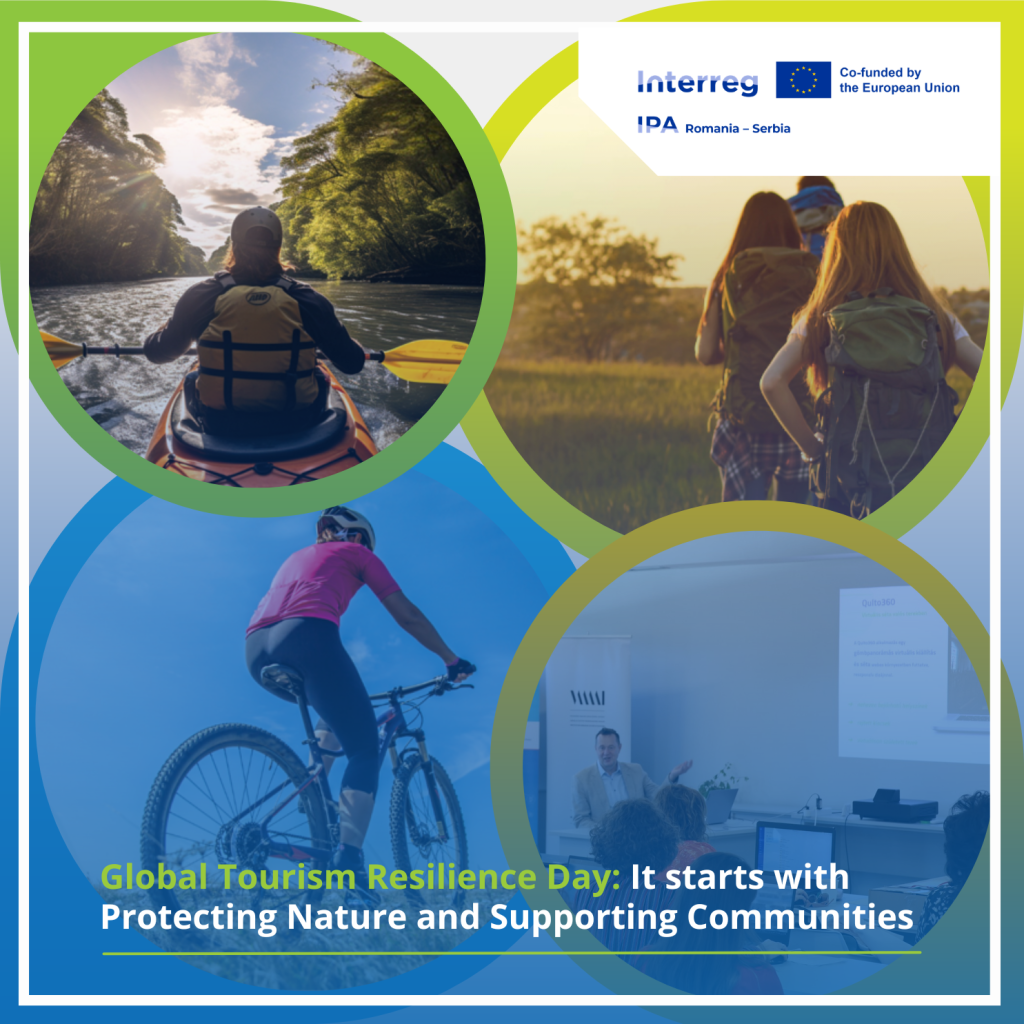
On 17 February we mark Global Tourism Resilience Day by highlighting several cross-border projects that are building a stronger, greener and more resilient tourism sector in the cross-border area between Romania and Serbia.
🚴 Cycling along Iron Curtain Trail – EuroVelo13 in Banat (Cycling ROSE) 🛣️
Jems Code: RORS00170
Total Budget: € 792.471,36
Partners: Timis County (Romania), Municipality of Zitiste (Serbia),Regional Agency for socio economic development – Banat (Serbia).
Cycling ROSE improves the cross-border cycling offer along EuroVelo 13. The project aims to develop new cycling circuits, to install route signage, and to create themed and educational routes linked to local culture and nature. By investing in cycling infrastructure and promoting active travel, the project plans to diversify the tourism offer and supports long-term economic resilience in rural areas.
🏹 Development of adventure tourism based on natural values of the Banat region (Avantur Banat) 🛶
Jems Code: RORS00173
Total Budget: € 722.740,57
Partners: Movement for Male Pijace Association (Serbia), Tisa Palic Cluster Association for tourism development (Serbia), Otelek ”Magyarul Magyarokert Egyesulet” Association (Romania).
The project partners are building a stronger, more resilient tourism sector in the Banat cross-border region. By improving infrastructure, supporting local tourism providers and promoting Male Pijace, Senta and Otelec as adventure destinations, they are creating a clear joint tourism offer and increasing the region’s visibility. The project’s results mean more opportunities for local businesses, more competitive destinations and a tourism sector better prepared for future challenges.
🍯 Promotion of eco – and health – tourism through Banat’s honey route (Banat Honey Route) 🐝
Jems Code: RORS00240
Total Budget: € 809.584,82
Partners: Regional development agency South Banat Ltd, Pancevo (Serbia), University of Life Sciences “King Mihai I” from Timisoara (Romania), Association of Beekeepers from Romania – Timis County Branch and Caras – Severin Branch (Romania).
The Banat Honey Route creates a new eco- and health-tourism experience across South Banat, Timiș and Caraș-Severin. The project develops a digital tourism platform and equips beekeepers with multifunctional trailers for apitherapy, promoting the health benefits of bee products. By linking local producers, innovation and tourism, the project builds a distinctive, sustainable tourism product rooted in regional identity.
🏛️ Digitalisation of the cultural traditions of the Banat region – securing the easy access for tourists and experts (Banat Heritage Portal) 💻
Jems Code: RORS00227
Total Budget: € 365.998,06
Partners: Institute for Hungarian Culture in Vojvodina (Serbia), Museum of Highland Banat, Resita (Romania).
The partners are safeguarding Banat’s cultural heritage by bringing it into the digital age. Through the creation of the Banat Heritage Portal, the partners are making museum collections from Senta (Serbia) and Resita (Romania) more accessible to the public, researchers and visitors. By digitising and connecting collections into one shared platform, they are preserving valuable cultural assets for the long term. Their work strengthens cultural identity, supports education and opens new opportunities for cultural tourism. By working across borders, the partners are building a shared digital space that keeps heritage alive and accessible for future generations.
🌱CBC Network for Sustainable Use of Natural Resources (Green-Path) 🦋
Jems Code: RORS00127
Total Budget: € 1.754.388,54
Partners: Excelsior Association for the Promotion of Natural and Cultural Heritage of Banat and Crisana (Romania), Provincial Secretariat for Urban Planning and Environmental Protection (Serbia), Municipality Bela Crkva (Serbia) and myNature Association (Romania).
Green-Path supports communities near protected natural areas in Romania and Serbia. The project restores habitats and green spaces, monitors air and water quality, and develops a joint strategy for pollution management and biodiversity conservation. By protecting natural resources and involving local people in environmental planning, the project strengthens the foundations of sustainable tourism and helps communities adapt to environmental challenges.
Together, these projects show how cooperation, environmental care and innovation can make tourism more resilient, inclusive and sustainable for the future.